





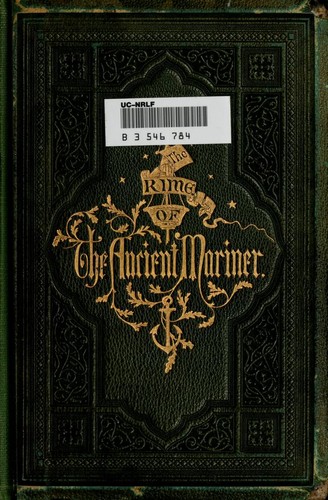
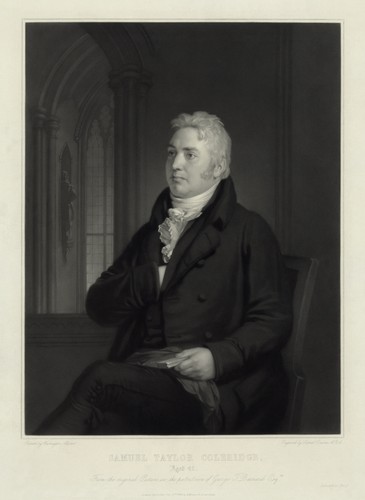
Author
Samuel Taylor Coleridge
21 October 1772 – 25 July 1834
Samuel Taylor Coleridge was an English poet, Romantic, literary critic and philosopher who, with his friend William Wordsworth, was one of the founders of the Romantic Movement in England and one of the Lake Poets. He is probably best known for his poems The Rime of the Ancient Mariner and Kubla Khan, as well as for his major prose work Biographia Literaria. His critical work, especially on Shakespeare, was highly influential, and he helped introduce German idealist philosophy to English-speaking culture. He coined many familiar words and phrases, including the celebrated suspension of disbelief. He was a major influence, via Emerson, on American transcendentalism. ([Source][1].) [1]:http://en.wikipedia.org/wiki/Samuel_Taylor_Coleridge
Bibliography
Books
30 books


Lyrical Ballads
1798
William Wordsworth, Samuel Taylor Coleridge, William 1770-1850 Wordsworth, Thomas Hutchinson

Prentice Hall Literature - Timeless Voices, Timeless Themes - The British Tradition
2002
Kate Kinsella, Kevin Feldman, Colleen Shea-Stump Ph.D., Joyce Armstrong Carroll, Edward E. Wilson, Joseph Addison, Anna Akhmatova, Yehuda Amichai, Matthew Arnold, W. H. Auden, Jane Austen, Joanna Baillie, Bashö, Charles Baudelaire, Bede, Bei Dao, James Berry, Tony Blair, William Blake, Eavan Boland, Robert Bolt, Jorge Luis Borges, James Boswell, Elizabeth Bowen, Charlotte Brontë, Emily Brontë, Brooke, Rupert, Elizabeth Barrett Browning, Robert Browning, Robert Burns, Buson Yosa, Lord Byron, Tracy Chapman, Geoffrey Chaucer, Winston S. Churchill, Arthur C. Clarke, Samuel Taylor Coleridge, Confucius, Joseph Conrad, Daniel Defoe, Anita Desai, Charles Dickens, John Donne, T. S. Eliot, Elizabeth l, Queen of England, Anne Finch, Mohandas Karamchand Gandhi, Nadine Gordimer, Thomas Gray, Graham Greene, Thomas Hardy, Seamus Heaney, Heinrich Heine, Robert Herrick, Όμηρος, Gerard Manley Hopkins, A. E. Housman, Ken Hughes, Ted Hughes, Kobayashi, Issa, Thomas Jefferson, Francis Jeffrey, Samuel Johnson, Ben Jonson, James Joyce, John Keats, Rudyard Kipling, Amelia Lanier, Philip Larkin, D. H. Lawrence, Doris Lessing, Richard Lovelace, Thomas Babington Macaulay, Louis MacNeice, Thomas Malory, Christopher Marlowe, Andrew Marvell, Catherine McGuinness, John Milton, Thomas More, Saki, V. S. Naipaul, Pablo Neruda, Sir Isaac Newton, George Orwell, Ovid, Wilfred Owen - undifferentiated, Margaret Paston, Samuel Pepys, Francesco Petrarca, Edgar Allan Poe, Alexander Pope, Anna Quindlen, Walter Raleigh, Redgrove, Peter., Arthur Rimbaud, Sappho, Siegfried Sassoon, William Shakespeare, Mary Shelley, Percy Bysshe Shelley, Sir Philip Sidney, Alan Sillitoe, Stevie Smith, Sydney Smith, Sophocles, Muriel Spark, Stephen Spender, Edmund Spenser, Suckling, John Sir, Jonathan Swift, Alfred Lord Tennyson, Dylan Thomas, Emma Thompson, William Trevor, Tu Fu, Suzanne Vega, Derek Walcott, Mary Wollstonecraft, Virginia Woolf, William Wordsworth, William Butler Yeats


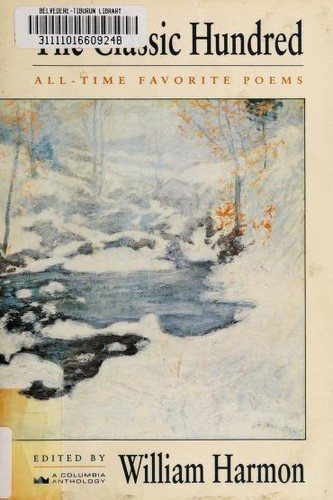
The Classic Hundred
1990
William Harmon, William Blake, John Keats, William Shakespeare, Gerard Manley Hopkins, Robert Frost, Samuel Taylor Coleridge, Matthew Arnold, Robert Herrick, Andrew Marvell, Christopher Marlowe, John Donne, Richard Lovelace, William Wordsworth


The Evil Image
1981
Patricia L. Skarda, Nora Jaffe, Daniel Defoe, John Aikin, Ann Radcliffe, Mary Alcock, Matthew Gregory Lewis, Samuel Taylor Coleridge, Lord Byron, John William Polidori, Mary Shelley, John Keats, Sir Walter Scott, Washington Irving, Edgar Allan Poe, Nathaniel Hawthorne, Charlotte Brontë, Emily Brontë, Charles Dickens, Christina Georgina Rosetti, Sheridan Le Fanu, Louisa May Alcott, Henry James, William Butler Yeats, Robert Louis Stevenson, Thomas Hardy, Stephen Crane, Montague Rhodes James, A. E. Coppard, William Faulkner, Eudora Welty, Flannery O'Connor, Anne Sexton, Stephen King

The Norton Anthology of English Literature --Seventh Edition -- Volume 2A
2000
M. H. Abrams, Anna Laetitia Barbauld, Charlotte Smith, William Blake, Mary Robinson, Robert Burns, Mary Wollstonecraft, Joanna Baillie, William Wordsworth, Dorothy Wordsworth, Sir Walter Scott, Samuel Taylor Coleridge, Walter Savage Landor, Charles Lamb, William Hazlitt, Thomas Moore, Thomas De Quincey, Lord Byron, Percy Bysshe Shelley, Clare, John, Felicia Dorothea Browne Hemans, John Keats, Mary Shelley, L. E. L.


Cover unavailable



Prentice Hall Literature--The British Tradition
2000
Andrew W. Conrad, Joseph Addison, Matthew Arnold, W. H. Auden, Bede, James Berry, William Blake, Eavan Boland, Marie Borroff, James Boswell, Elizabeth Bowen, Brooke, Rupert, Elizabeth Barrett Browning, Robert Browning, John Bunyan, Robert Burns, Lord Byron, Geoffrey Chaucer, Samuel Taylor Coleridge, Joseph Conrad, Daniel Defoe, Charles Dickens, John Donne, Margaret Drabble, John Dryden, T. S. Eliot, E. M. Forster, Nadine Gordimer, Robert Graves, Thomas Gray, Graham Greene, Thomas Hardy, William Hazlitt, Seamus Heaney, George Herbert, Robert Herrick, Gerard Manley Hopkins, A. E. Housman, Ted Hughes, Samuel Johnson, Ben Jonson, James Joyce, John Keats, Kennedy, Charles W., Rudyard Kipling, Philip Larkin, D. H. Lawrence, Doris Lessing, Richard Lovelace, Louis MacNeice, Thomas Malory, Katherine Mansfield, Christopher Marlowe, Andrew Marvell, George Meredith, John Milton, V. S. Naipaul, George Orwell, Wilfred Owen - undifferentiated, Samuel Pepys, Alexander Pope, Burton Raffel, Walter Raleigh, Henry Reed, Christina Georgina Rosetti, Dante Gabriel Rossetti, Siegfried Sassoon, William Shakespeare, George Bernard Shaw, Mary Shelley, Percy Bysshe Shelley, Sir Philip Sidney, Alan Stilltoe, Stevie Smith, Stephen Spender, Edmund Spenser, Sir Richard Steele, Suckling, John Sir, Jonathan Swift, Alfred Lord Tennyson, Dylan Thomas, William Trevor, Derek Walcott, Virginia Woolf, William Wordsworth, William Butler Yeats



On the constitution of the church and state according to the idea of each
1830
Samuel Taylor Coleridge



Cover unavailable
