





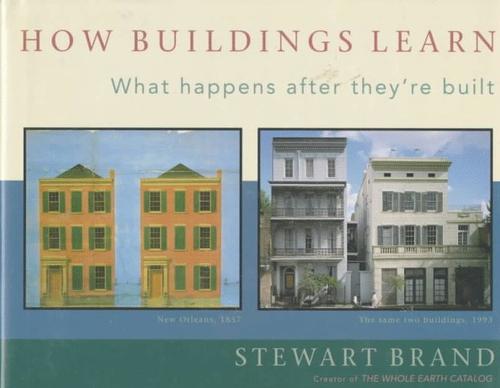
How Buildings Learn
4.3/ 5
6 ratings
About This Book
Buildings have often been studies whole in space, but never before have they been studied whole in time. How Buildings Learn is a masterful new synthesis that proposes that buildings adapt best when constantly refined and reshaped by their occupants, and that architects can mature from being artists of space to becoming artists of time. From the connected farmhouses of New England to I.M. Pei's Media Lab, from "satisficing" to "form follows funding," from the evolution of bungalows to the invention of Santa Fe Style, from Low Road military surplus buildings to a High Road English classic like Chatsworth -- this is a far-ranging survey of unexplored essential territory. More than any other human artifacts, buildings improve with time -- if they're allowed to. How Buildings Learn shows how to work with time rather than against it. - Publisher.
Track Your Reading
Sign in to save this book, track pages, log finished reads and rereads, and build your Reading Diary.
Sign InBuildingsPerformanceHuman factorsArchitectureUtilizationLong Now Manual for CivilizationArchitecture, conservation and restorationBuildingConservation and restoration
The Swinging Light
Book Details
First Published
1994
Pages
243 pages
Rating
4.3 / 5
Ratings
6
Editions
6
Publisher
Orion Publishing Group, Limited
Language
ENG
Status
Published
The People Behind The Book
Authors
You May Also Like
Recommended Books




A pattern language
1977
Christopher Alexander, Sara Ishikawa, Murray Silverstein, Max Jacobson, Ingrid Fiksdahl-King, Shlomo Angel, Nax Jacobsohn