







Miró
0.0/ 5
0 ratings
About This Book
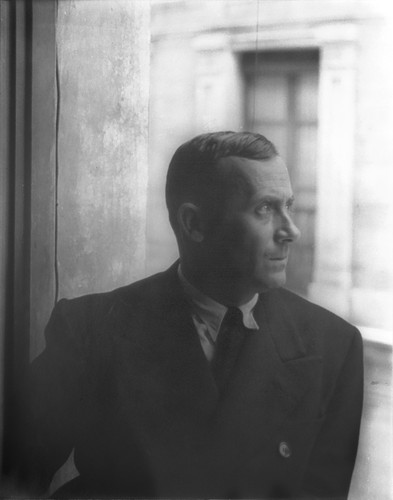
Joan Miro (1893-1983), the foremost painter associated with Surrealism, studied in his native Barcelona before going to Paris in 1920. He was enthralled by the work of the Cubist and Fauve artists, who influenced his early style. During the 1920s he met regularly with a number of Surrealists, with whom he began to exhibit in 1925. His free-form abstractions from the 1920s draw on fantasy, dream, and myth, and many have been characterized as attempts at psychic automatism, or direct transcription of the subconscious. Despite such links with the Surrealists, however, Miro was never an orthodox member of the group. After 1930, he developed his lyrical mature style, distinguished by playful juxtapositions of freely flowing lines and brightly colored, abstract or organic forms. With remarkable consistency, he would continue to work in this visual world he had made for the rest of his career. During World War II he created an astonishing series of works on paper known as the Constellations, among the most personal of all artists' responses to the disasters of that time. In the late 1940s and the 1950s, Miro produced a number of monumental paintings, including murals for hotels in New York and Cincinnati and for the Graduate Center at Harvard University. In 1958 he designed one of his largest works, the ceramic mural for the UNESCO Building in Paris. Besides paintings, Miro produced a large body of lithographs, a medium especially suited to his simplified forms and wiry lines.
Track Your Reading
Sign in to save this book, track pages, log finished reads and rereads, and build your Reading Diary.
Sign InCatalogsExhibitionsCriticism and interpretationModern ArtCeramic sculptureWall hangingsMiro, joan, 1893-1983PostersIllustrationsUbu (Fictitious character) in artArt collectionsArt
The Swinging Light
Book Details
First Published
1955
Pages
111 pages
Rating
0.0 / 5
Ratings
0
Editions
54
Publisher
Ayuntamiento de Málaga
Language
CAT, ITA, SWE
Status
Published
The People Behind The Book
Authors
You May Also Like
Recommended Books


Introduction to cataloging and classification
2000
Arlene G. Taylor, Daniel N. Joudrey, David Peter Miller


