

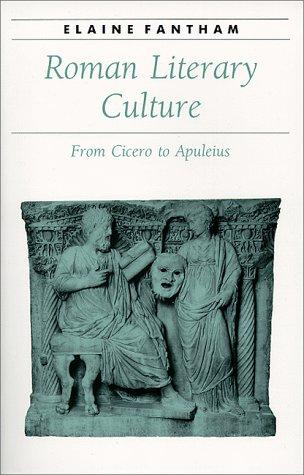
Roman Literary Culture
0.0/ 5
0 ratings
About This Book
Scholars of ancient literature have often focused on the works and lives of major authors rather than on such questions as how these works were produced and who read them and under what circumstances. In Roman Literary Culture Elaine Fantham fills that gap by examining the changing social and historical context of literary production in ancient Rome and its empire. Fantham discusses the habits of Roman readers and developments in their means of access to literature, from booksellers and copyists to pirated publications and libraries. She examines the issues of patronage and the utility of literature. She shows how the constraints of the physical object itself - the ancient "book" - influenced the practice of both reading and writing. And she explores the ways in which ancient criticism and critical attitudes reflected cultural assumptions of the time. Beginning with Cicero and his older contemporary Varro, Roman Literary Culture reviews both the public and the more private literary forms of the Augustan Age, when an elite reared on the primacy of Greek culture first confronted - and took pride in - their Roman literary inheritance. By the first century A.D., Fantham explains, Roman models dominated, and a new readership was evolving which included women and non-elite readers in the provinces who benefitted from a newly emerging commercial book trade. The second century brought a recurrence of Greek influence, as celebrated Greek rhetoricians and performers gave rise to a hybrid culture in which Greek and Latin values intertwined. The book concludes with a look at the ecumenical spread of Latin and its perpetuation through Christian literature.
Track Your Reading
Sign in to save this book, track pages, log finished reads and rereads, and build your Reading Diary.
Sign InIntellectual lifeLatin literatureLiterature and historyHistory and criticismLatin literature, history and criticismRome, intellectual life
The Swinging Light
Book Details
First Published
1996
Pages
360 pages
Rating
0.0 / 5
Ratings
0
Editions
4
Publisher
The Johns Hopkins University P
Language
ENG
Status
Published
The People Behind The Book
Authors
You May Also Like
Recommended Books

Anti-intellectualism in American life
1963
Richard Hofstadter, Richard Hofstadter, Adam Verner, Richard Hofstadter