

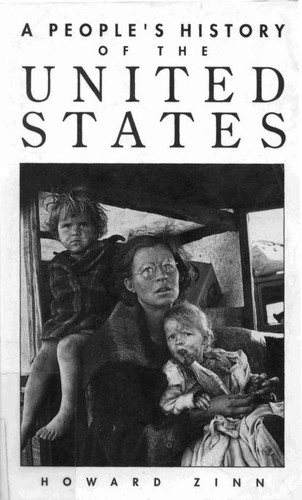
A People's History of the United States
1980
Howard Zinn, Kathy Emery, Ellen Reeves, Matt Damon, Howard Zinn

About This Book
" Americans constantly make moral statements about presidents and foreign policy. Unfortunately, many of these judgments are poorly thought through. A president is either praised for the moral clarity of his statements or judged solely on the results of their actions. Woodrow Wilson showed, however, that good intentions without adequate means can lead to ethically bad consequences. Richard Nixon, on the other hand, is credited with ending the Vietnam War, but he sacrificed 21,000 American lives and countless others for only a brief "decent interval." In Do Morals Matter?, Joseph S. Nye, Jr., one of the world's leading scholars of international relations, provides a concise yet penetrating analysis of the role of ethics in US foreign policy during the American era after 1945. Nye works through each presidency from Truman to Trump and scores their foreign policy on three ethical dimensions of their intentions, the means they used, and the consequences of their decisions. Alongside this, he also evaluates their leadership qualities, elaborating on which approaches work and which ones do not. Regardless of a president's policy preference, Nye shows that each one was not constrained by the structure of the system and actually had choices. He further notes the important ethical consequences of non-actions, such as Truman's willingness to accept stalemate in Korea rather than use nuclear weapons. Since we so often apply moral reasoning to foreign policy, Nye suggests how to do it better. Most importantly, presidents need to factor in both the political context and the availability of resources when deciding how to implement an ethical policy--especially in a future international system that presents not only great power competition from China and Russia, but transnational threats as borders become porous to everything from drugs to infectious diseases to terrorism to cyber criminals and climate change. "-- "At dinner with a group of friends, one asked what I had been doing lately. When I said I was writing a book on presidents, ethics and foreign policy, she quipped "it must be a short book." Another added more seriously, "I didn't think ethics played much of a role." That conventional wisdom marks not only dinner discussions, but political analyses as well. An Internet search shows surprisingly few books on how presidents' moral views affected their foreign policies and how that affects our judgments of them. As Michael Walzer (an important exception to the rule) described American graduate training after 1945, "moral argument was against the rules of the discipline as it was commonly practiced, although a few writers defended interest as the new morality." A survey of the top three American academic journals on international relations over fifteen years found only four articles on the subject. As one author noted, "leading scholars...do not dedicate serious attention to investigating the influence of moral values on the conduct of nations." It is not a career-enhancing topic for a young scholar, but has long intrigued me as an old practitioner and student of American foreign policy. The reasons for skepticism seem obvious to many. While historians have written about American exceptionalism and moralism, diplomats and theorists like George Kennan long warned about the bad consequences of the American moralist-legalist tradition. International relations is the realm of anarchy with no world government to provide order. States must provide for their own defense, and when survival is at stake, the ends justify the means. Where there is no meaningful choice there can be no ethics. As philosophers say, "ought implies can". No-one can fault you for not doing the impossible"--
Track Your Reading
Sign in to save this book, track pages, log finished reads and rereads, and build your Reading Diary.
Sign InThe Swinging Light
First Published
2020
Pages
272 pages
Rating
0.0 / 5
Ratings
0
Editions
2
Publisher
Oxford University Press, Incorporated
Language
ENG
Status
Published
The People Behind The Book
You May Also Like
1980
Howard Zinn, Kathy Emery, Ellen Reeves, Matt Damon, Howard Zinn



2014
Bill Clinton, James Patterson, Bill Clinton, Bill Clinton, President Bill Clinton, Bill Clinton, Bill Clinton