2005•286 pages•Published•ENG•User Reviews Forever free
About This Book
This new examination of the years of Emancipation and Reconstruction during and immediately following the Civil War emphasizes the era's political and cultural meaning for today's America. Historian Foner overturns numerous assumptions growing out of the traditional understanding of the period, which is based almost exclusively on white sources and shaped by (often unconscious) racism. He presents the period as a time of determination, especially on the part of recently emancipated black Americans, to put into effect the principles of equal rights and citizenship for all. He makes clear how, by war's end, freed slaves built on networks of church and family in order to exercise their right of suffrage as well as gain access to education, land, and employment, and shows that the birth of the Ku Klux Klan and renewed acts of racial violence were retaliation for the progress made by blacks soon after the war.--From publisher description.
Track Your Reading
Sign in to save this book, track pages, log finished reads and rereads, and build your Reading Diary.
Sign InAfrican AmericansEmancipationHistoryPolitics and governmentRace relationsReconstruction (U.S. history, 1865-1877)SlavesUnited States Civil War, 1861-1865American Civil War (1861-1865) fast (OCoLC)fst01351658Slaves, emancipation, united statesUnited states, history, civil war, 1861-1865, african americansUnited states, race relations
The Swinging Light
Book Details
The People Behind The Book
Authors
You May Also Like
Recommended Books
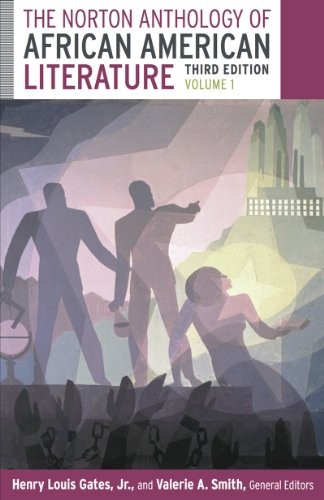
The Norton Anthology of African American Literature
2014
Henry Louis Gates, Jr., Valerie Smith, William L. Andrews, Kimberly Benston, Brent Hayes Edwards, Frances Smith Foster, Deborah E. McDowell, Robert G. O'Meally, Hortense J. Spillers, Cheryl A. Wall